Introduction
Rapid urbanisation across East Africa presents opportunities and profound challenges for sustainable and equitable development. While urban populations have grown rapidly, this growth has not consistently translated into improved productivity or equitable development. Colonial legacies of segregated and car-oriented planning persist disadvantaging the majority who rely on non-motorised transport. Equitable urban transitions therefore require legal frameworks to prioritise inclusive mobility, participatory planning, and climate-resilient infrastructure.
This article assesses whether urban planning laws in the Republic of Kenya, Republic of Rwanda and the Federal Democratic Republic of Ethiopia enable or constrain urban transitions. It contends that while Kenya, Rwanda and Ethiopia have adopted comprehensive legal frameworks for urban planning, equitable urban transitions remain constrained by weak enforcement, centralised governance structures, displacement risks, and inadequate mechanisms for meaningful public participation.
Kenya
Kenya’s Constitution entrenches sustainable development and public participation, requiring land use and urban planning to align with equity and social justice. The Physical and Land Use Planning Act provides a comprehensive framework for physical and land use planning. Planning responsibilities are decentralised to county governments, which are required to facilitate public participation in the preparation and approval of development plans. The Act is complemented by the Physical and Land Use Planning (Development Permission and Control) Regulations of 2021 that seek to manage land carrying capacity and combat urban sprawl.
The Urban Areas and Cities Act 2011 regulates the classification, governance, and management of urban areas establishing frameworks for integrated development planning and directing citizen participation in decision-making. Collectively, these legal provisions advance Kenya’s decentralisation agenda and seek to promote urban growth that is inclusive, accountable, and responsive to public needs.
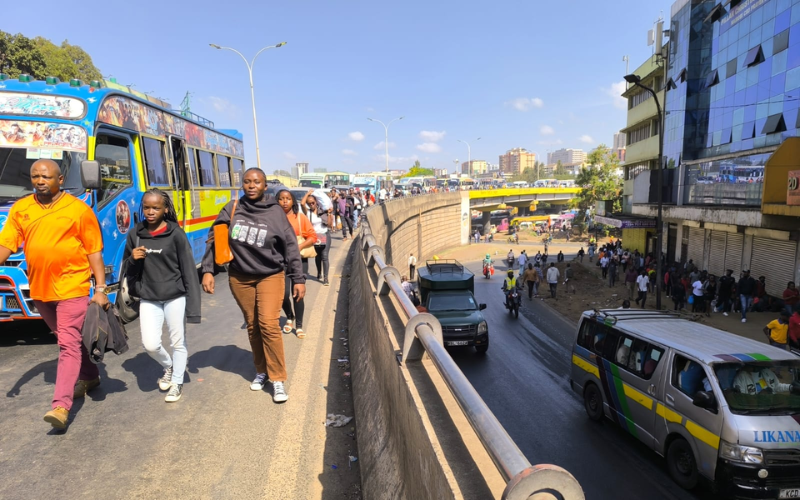
While the legal framework is comprehensive, enforcement remains weak. Challenges include corruption, inadequate resources, limited technical capacity and political interference. These weaknesses have contributed to unregulated high-rise developments, urban sprawl in Nairobi, and inadequate transport, water, and sewage infrastructure.
Rwanda
In the region, Rwanda stands out for having a centralised and ambitious approach to urban planning. Land in Rwanda is governed by the Organic Law N° 43/2013, while Law N° 24/2012 governs land use planning and development. Rwanda’s legal framework incorporates a strong top-down governance model and Umuganda, a mandatory community service program that encourages citizen participation in local development. This approach to urban planning has contributed to Kigali’s urban development characterised by paved roads, improved public spaces, incorporation of walkways and bike lanes and reduced informal settlements. Urban transformation in Rwanda is guided by the Kigali Master Plan, which emphasises on mixed-use development, densification, modern mobility and green infrastructure.
Rwanda’s urban planning laws have however raised concerns regarding social equity and genuine participation. Urban renewal projects and expropriation processes have, in certain cases, led to forced evictions, displacement and insufficient compensation. A strong focus on modernisation and aesthetics may marginalise informal workers and low-income communities, while exacerbating affordability challenges and social tensions.
Ethiopia
Land in Ethiopia is publicly owned by the state and the people. Urban land is governed by the Urban Lands Lease Holdings Proclamation No. 272/2002 and its successors, including Proclamation No. 721/2011. Ethiopia’s legal framework ties land allocation in urban planning to urban master plans and public interest. The land ownership model of Ethiopia allows the government to direct land use towards public goods such as roads, affordable housing and green spaces but this approach has also had significant drawbacks.
Ethiopia’s urban planning model is highly centralised and limits local participation. The ongoing Addis Ababa corridor project aims to enhance the functionality, safety, liveability and beauty of the city. Interventions carried out under the project include widening walkways, adding bike lanes, expanding green spaces, constructing public terminal facilities, and building off-street parking. However, implementation of the corridor development projects has been associated with displacement and contested compensation arrangements leading to erosion of social ties and loss of livelihoods.
Conclusion and Recommendations
While Addis Ababa has been successful in renewing the city through the corridor project amid ongoing work, the challenge presented currently is on management of the projects. Without proper planning, there is a likelihood of neglect of the newly developed areas leading to deterioration and incurring losses. Development of urban plans also requires a dedicated annual budget to ensure maintenance of the newly developed spaces. A lack of proper regulation and oversight leaves these newly developed spaces neglected and exposed to vandalism and encroachment.
Kigali has been successful in its urban planning since it is supported by strong governance structures, transparent decision-making and community involvement. Active participation of residents in making and maintaining city infrastructure through Umuganda in Rwanda, fosters community ownership and strengthens the sustainability of projects and infrastructure which is less developed in Nairobi’s urban planning framework. While the legal framework in Kenya provides an equitable approach, urban planning in Kenya follows a top-down model and is influenced in some cases by elite interests. However, limited accommodation of bottom-up participation, insufficient consultation with vulnerable communities, and overreliance on an elite-driven model remain major limitations to equity in Rwanda’s urban planning approach.
Corruption, inflated costs and forced evictions lead to social unrest and continue to alienate the urban residents from the city. Cohesive governance structures in African cities that ensure community engagement, transparency and accountability are the only guarantee of building inclusive and equitable cities. There is a need to create a dedicated authority with clearly defined roles to manage green spaces including parks, public squares and green corridors. Sustainable funding sources from municipal budgets, public-private partnerships and user fees are also required to provide financial support and ensure continuity. Transparent oversight mechanisms are also important to track expenditure and ensure accountability.
Finally, communities should be actively involved in the management and maintenance of public spaces since it will not only create employment opportunities but will also lead to better maintenance and build stronger social bonds. Involving local residents will also ensure that urban areas meet the evolving needs of their residents and decision-making and planning is not alienated from the city’s inhabitants as is commonly the case.
