The African Legal Studies blog is a platform where human rights, environmental law as well as regional integration law research meets interdisciplinary perspectives, always emphasizing mutual exchange. Here you can explore our symposia.
Symposium with Business and Human Rights Blog: Gathering Perspectives on African Leadership in Business and Human Rights
The Business and Human Rights (BHR) field has increasingly developed around frameworks and regulatory approaches originating in the Global North. While these have made important contributions to corporate accountability, they also leave open questions about whose legal traditions, institutions, and experiences shape the field.
This Blog Symposium, co-hosted by the africanlegalstudies.blog and the Business and Human Rights Journal (BHRJ) Blog, brings together scholars and practitioners from across the African continent and the African diaspora to explore these questions and to explore African leadership in BHR.
Across fourteen contributions, the symposium moves from the African Charter on Human and Peoples’ Rights and regional institutions to national constitutional frameworks, customary governance, and grassroots initiatives. It also turns to areas that remain less visible in mainstream BHR. Published over three weeks, the contributions offer different perspectives on the challenges, innovations, and future pathways of BHR in African contexts. Taken together, they ask us to look beyond Africa as a place where BHR standards are implemented and to take seriously the ways in which African law, institutions, and legal thought are already contributing to the development of the field.
Africa as Norm-Maker: Introducing the BHRJ/ALS Blog Symposium on Business, Human Rights, and African Legal Thought
Setting the Stage The Business and Human Rights (BHR) field has long been dominated by frameworks emanating from the Global North, most notably the 2011 United Nations Guiding Principles on Business and Human Rights (UNGPs), and more recently the European…

The Making of an African Approach to Business and Human Rights through the Repurposing of Individual “Duties”
The African System as a “Norm Leader” As Obiora Okafor and Godwin Dzah wrote, the African human rights system is rarely imagined as “an originator, agent and purveyor” of norms.…

Building on Nyerere: Rethinking Business and Human Rights through the African Charter and (indigenous) African Perspectives
Starting on Solid Ground Regions across the so-called ‘Global South’ are rich in resources, such as oil, minerals, cobalt, gold and fertile agricultural land, that are scarce elsewhere, making them…
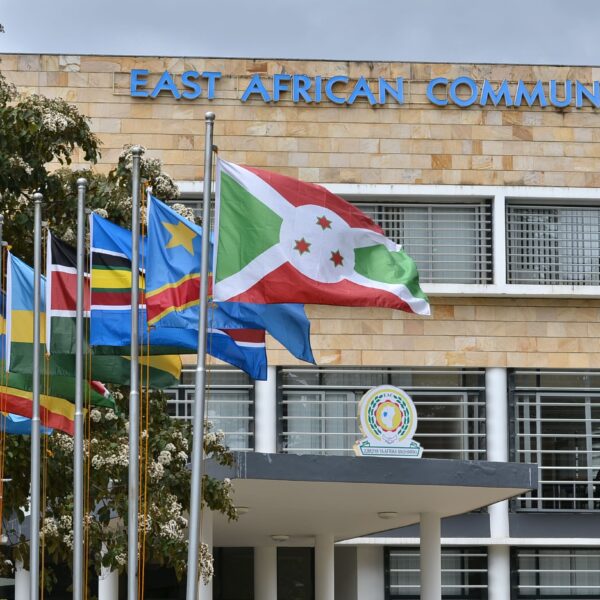
Justice Without Business and Human Rights Jurisdiction: The Case of the EACJ as a Regional Judicial-Based Remedy Mechanism
Introduction Pursuant to Article 23 (1) of the EAC Treaty 1999, the East African Court of Justice (EACJ) is the primary judicial organ of the East African Community (EAC or…

The EU-SADC Economic Partnership Agreement and Corporate Accountability: Opportunities and Limitations for Protecting Human Rights
Bridging Trade and Human Rights in Southern Africa The Economic Partnership Agreement (EPA) between the European Union and the Southern African Development Community (SADC) States represents a significant milestone in…
Symposium with Law and Development Conversations Blog: Rethinking Legal Research in and with Africa
This symposium emerged from the early career workshop Rethinking Legal Research in and with Africa: Legal Methods, Critical Perspectives, and Decolonial Approaches in the Context of Human Rights and Sustainable Development, which took place from 16–18 March 2026 at the University of Antwerp as a collaborative event organised by the Law and Development Research Group at the University of Antwerp together with the Chair of African Legal Studies at the University of Bayreuth.
The initial idea for this workshop was to bring early-career researchers from Antwerp and Bayreuth together, having identified overlapping interests between the two research institutions. As planning progressed, more colleagues joined the conversation, ultimately bringing together a diverse and inspiring audience of around 35 bright and kind minds.
The endeavour to critically rethink legal research in and with Africa – something that is not new at all – is clearly an exercise that takes more than three days. The workshop was therefore largely designed as a forum for joint exchange and learning, with a key element being a co-creative session in which the participants worked on joint blog contributions.
From the bottom-up: how transitional justice is being reappropriated and used as a mobilising tool in Eastern DRC
This blog piece is part of our ongoing “Rethinking Legal Research in and with Africa” symposium. To access the introduction explaining the framework, click here (ALS / LDC), to access the overview of the symposium click here (ALS / LDC).…
Leveraging Customs and Traditions in Addressing Child Marriages in Tanzania: An Interdisplinary Approach and Cultural Legitimacy
Introduction According to international and African regional human rights instruments, some customs and traditions underpinning child marriage are considered harmful practices and should therefore be abolished, regardless of the cultural,…
Upholding Human Dignity in the Feed: The Case of Meta in Kenya
This blog piece is part of our ongoing “Rethinking Legal Research in and with Africa” symposium. To access the introduction explaining the framework, click here (ALS / LDC), to access…
Bottom-Up Approach to Just Transition in the Mining Industry
Amid escalating impacts of climate change, energy transition is strikingly necessary to tackle climate change. There is an equally important question as the necessity of transition: how this energy transition…
A legitimacy critique of the usage of IFC Performance Standards (2012) in relation to human rights by development financiers and agencies
This blog piece is part of our ongoing “Rethinking Legal Research in and with Africa” symposium. To access the introduction explaining the framework, click here (ALS / LDC), to access…
Symposium with Verfassungsblog: Unmasking the Intractable: Exploring Anti-Racism and the Law
The joint symposium between Verfassungsblog and the africanlegalstudies.blog critically addressed the enduring challenges of racial inequality within international and national legal frameworks. It examined the effectiveness of anti-racism laws, questioning whether their shortcomings arise from unrealistic expectations or inherent design flaws.
Unmasking the Intractable: Exploring Anti-Racism and the Law
Racism trends across the world reveal persistent and evolving challenges despite legislative efforts and advancements in social cohesion. In the EU, an ominous rising wave of far-right populism has exacerbated racial tensions, with increased incidents of hate crimes and discriminatory…
German police controls and structural racism
Since 15 March 2024, Germany has an ombudsperson for its federal police forces. The German Bundestag passed a law creating the Polizeibeauftragte des Bundes (federal police commissioner). The former MP…
Anti-Racism Law and its Limits
Contemplating the “Conceptual Blurriness of Race” By drawing upon insights of sociolegal thought, feminism and the US social context, this contribution argues that anti-racism law’s apparent ineffectiveness stems from its…
How the Judgment by the German Federal Constitutional Court on the German Debt Brake Entrenches Climate Injustice
As a major emitter of greenhouse gasses, Germany has a fundamental responsibility to show solidarity with developing countries suffering from the effects of climate change. This obligation is clear from…
Anti-Black Racism: Queer Europe’s Inconvenience beyond the Law
Drawing on conversations with a queer interlocutor who moved to Austria to escape persecution in their country of origin, I reflect on the limits of legal protection in the host…
Exploring Intersectionality as a Concept to Effectively Combat Racism and Racial and Ethnic Discrimination
Introduction This contribution aims to highlight the shortcomings of European and International anti-racism law with respect to discriminations based on nationality. It promotes the concept of intersectionality as a means…
Addressing racial discrimination through international law
The neglected potential of the International Convention on the Elimination of All Forms of Racial Discrimination Introduction Why do anti-racism laws fail to combat racism effectively? That is the leading…
Why offshore processing of asylum applications is actually racist
In a series of legislative and policy changes including the Illegal Migration Act 2023, Nationality and Borders Act 2022, the New Plan for Immigration, the UK-Rwanda Migration and Economic Development…
Do Sanctions Work? Memories of a Rhodesian Childhood
Scene Setting I remember it clearly. Recently arrived in Oxford to start my postgraduate studies, I was visited in my room by one of my housemates. I offered her grapes.…
Why Teaching International Law Should Be an Antiracist Endeavour
The field of international law, developed in the shadow of colonialism and global power imbalances, has long been influenced by racial biases and hegemonic interests. These historical and systemic inequalities…