
Israel’s Recognition of Somaliland: Does the Ankara Declaration Preclude Ethiopia…
Introduction Somaliland, a breakaway region of Somalia has remained a de facto independent state since 1991.[1] Historically, the unified state…

The Message Communicated to African Regionalisation Following the Creation of…
Introduction The Alliance of Sahel States, also known in French as the ‘Alliance des Etats du Sahel’ (AES), is a…

The invention of the non-white illegal alien species: the case of…
Introduction Since the 2024 United States of America (USA) presidential elections, I have largely stopped following American news. It has…
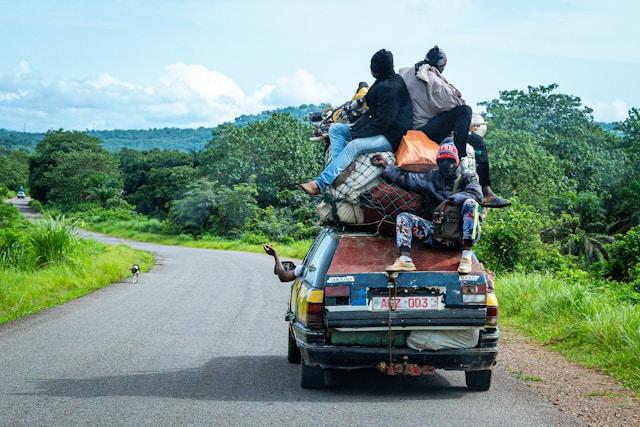
Chasing Horizons: How Kenya’s Government Shapes Overseas Job Opportunities
Introduction Unemployment and underemployment as socio-economic challenges in Kenya have been a push factor for job seekers to seek opportunities…
When the Mask Falls: International Law, Power Politics and Africa’s…
Introduction The current moment is often described as an escalation. In truth, it is something else: a revelation. International politics,…

Between joy in legal research and a foolish call –…
When Laws Fall Short: Unresolved Questions and Emerging Realities My doctoral research focussed on analysing the normative, institutional and procedural…
- Imagining an “Afrocentric future” of international law: Observations on emerging key featuresIntroduction: The long-awaited change in the making Following in the footsteps of most recent calls by African legal scholars, in this blog I share my own reflections on what should be some of the most essential elements of an “Afrocentric future” of international law. This cannot be done without acknowledging the long-standing research agenda of…
- Child Marriage in Somalia: Legal Pluralism and the Limits of International Human Rights ImplementationIntroduction: Child Marriage in Contemporary Somalia In 2025, Somalia ratified the African Charter on the Rights and Welfare of the Child.[1] Ten years earlier, the country had also ratified the Convention on the Rights of the Child, which clarifies the age of majority as 18.[2] The move was met with protests, with men arguing that…
- Why the decolonisation of Ceuta should not be a “taboo topic”Introduction: The events of 31 July 2026 and preliminary remarks On Thursday, 30 July 2026, roughly 50,000 to 60,000 migrants crossed from Morocco into the Spanish exclave of Ceuta. The surge involved people swimming, using inflatables, or rushing border gates, triggered by social media rumours, and resulted in at least 67 deaths. More specifically, on…
- Equitable Urban Transitions in Africa: Legal Opportunities and ConstraintsIntroduction Urbanisation in sub-Saharan Africa is accelerating at an unprecedented rate, with the urban population projected to grow from approximately 472 million in 2020 to over 1.2 billion by 2050, raising the proportion of city dwellers from 43 % to nearly 60 % of the total population. This rapid growth presents both opportunities and challenges for equitable urban development.…
- Inclusive Urban Transitions and Planning Law in East Africa: A Comparative Review of Kenya, Rwanda, and EthiopiaIntroduction Rapid urbanisation across East Africa presents opportunities and profound challenges for sustainable and equitable development. While urban populations have grown rapidly, this growth has not consistently translated into improved productivity or equitable development. Colonial legacies of segregated and car-oriented planning persist disadvantaging the majority who rely on non-motorised transport. Equitable urban transitions therefore require…
- State obligations in addressing Climate Change: The interplay between the climate treaty regime and international Human Rights lawIntroduction Recent climate events illustrate the growing human impact of climate change.[1] However, the legal framework governing state responsibility remains fragmented. This short piece argues that while climate treaties provide the primary institutional framework for mitigation, adaptation and international cooperation, human rights law imposes more stringent and enforceable duties on states. I highlight how the…
- Child Marriage in Somalia: Legal Pluralism and the Limits of International Human Rights ImplementationIntroduction: Child Marriage in Contemporary Somalia In 2025, Somalia ratified the African Charter on the Rights and Welfare of the Child.[1] Ten years earlier, the country had also ratified the Convention on the Rights of the Child, which clarifies the age of majority as 18.[2] The move was met with protests, with men arguing that…
- The Human Rights Situation in the Federal Republic of Somalia: Challenges and Perspectives Introduction The Federal Republic of Somalia, located in the Horn of Africa, bears the scars of a past marked by colonial rule, a brief period of independence, and a devastating civil war that began in 1991. The collapse of the central government plunged the country into years of anarchy and clan-based violence, while also enabling…
- Investment and Investor Protection in SomaliaIntroduction With Somalia’s accession to the East African Community (EAC), the internal market of this community is also becoming increasingly attractive for foreign investments. A common market with over 300 million populations is developing, and there is not only a common internal market. It also has an excellent strategic location from the Indian Ocean to…
- A Digital Pathway to Integration Beyond Legal Frameworks to Digital RealityIntroduction The region’s track towards integration has been long: legal frameworks have been established, the Customs Union has been formed,[1] the Common Market Protocol has been put in place,[2] and the Monetary Union is the ultimate goal pursued for more than 20 years[3]. But the gap between policy and practice is wide: intra-EAC trade has…
- The Message Communicated to African Regionalisation Following the Creation of the Alliance of Sahel States-AESIntroduction The Alliance of Sahel States, also known in French as the ‘Alliance des Etats du Sahel’ (AES), is a confederation formed by Burkina Faso, Niger, and Mali.[1] The AES was established in September 2023, following the adoption of the Charter of Liptako-Gourma, which establishes the Alliance of Sahel States.[2] The AES Charter was signed…
- How African countries are managing the potentially catastrophic risks of just transition through the investment regimeIntroduction Foreign investment has long been an important policy tool for countries seeking to transform their economies. The international investment regime—comprising treaties and institutions—has supported this objective by creating policies to attract and protect investment. For developing countries, foreign investment plays a particularly crucial role in alleviating poverty, generating employment opportunities, and fostering economic…