Introduction
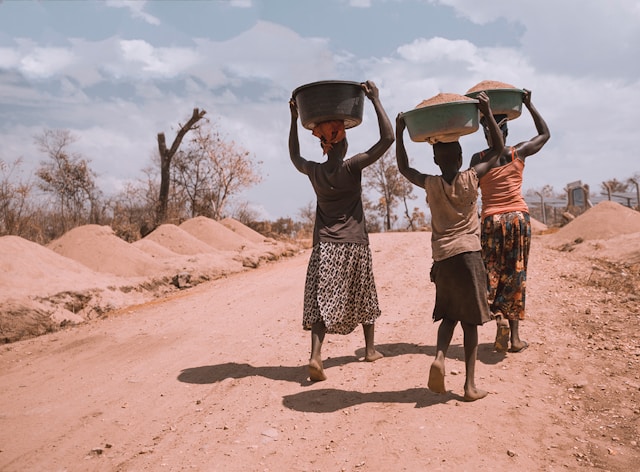
Human Trafficking: A crime that shames us All.[1] Human trafficking remains one of the most pressing human rights violations in Africa, with women and girls facing the most severe forms of exploitation.[2] While increased mobility across the continent has expanded economic opportunities, it has also been exploited by traffickers. Women and girls who fall victim to trafficking often suffer long-term trauma, including sexual violence and reproductive harm.[3] Despite existing legal frameworks, convictions remain low. Victims continue to face significant barriers to justice, such as fear of retaliation or deportation, social stigma, and weak protection systems.[4] These realities call for gender-sensitive responses to human trafficking across Africa. This paper, therefore, seeks to explore the root causes of trafficking, the unique vulnerabilities of women and girls, and the urgent need for holistic, gender-responsive, and collaborative approaches to prevention, protection, and justice on the continent.
Structural Drivers of Human Trafficking in Africa
Human trafficking in Africa is not just a legal or criminal issue, it’s a symptom of deeper legal, political, and social vulnerabilities. The discussion that follows explores how weak law enforcement, unstable governance, and harmful societal norms create conditions where trafficking can thrive, and why tackling it requires solutions rooted in Africa’s specific realities.
Although most African countries have ratified the Palermo Protocol and adopted national anti-trafficking laws, enforcement remains weak, inconsistent, and often under-resourced.[5] The Palermo Protocol promotes a comprehensive approach to combating human trafficking, focusing on prevention, protection of victims, and prosecution of offenders.[6] In line with its provisions, several African nations, including Nigeria,[7] Ghana,[8] and Tanzania,[9] have enacted specific legislation to address trafficking. South Africa has also taken important steps by introducing laws on child care, child justice, and sexual offences, culminating in the recent adoption of the Prevention and Combating of Trafficking in Persons Act, which aims to tackle trafficking in a more integrated manner.[10] However, the mere existence of such laws does not guarantee the end of trafficking-related abuses. Limited judicial capacity, corruption, and a lack of specialized training among law enforcement agencies continue to undermine effective implementation.
Additionally, political instability plays a significant role in enabling human trafficking. Armed conflict, fragile state institutions, and porous borders in countries like Libya, Sudan, and the Central African Republic provide a permissive environment for trafficking networks to operate unchecked.[11] This breakdown of institutional order often results in women and children being abducted, forced into marriage, or recruited into militias, with little to no accountability.[12] Even in relatively stable nations, the political will to prioritize trafficking is often limited, especially when overshadowed by other pressing governance concerns such as elections, economic crises, or regional insecurity. Border control challenges further compound this issue. Border permeability facilitates regional and international trafficking by criminal organizations.[13] Moreover, many border control agencies lack the technical capacity to detect and prevent trafficking, and in some cases, do not even maintain manual records of commercial crossings, allowing traffickers to exploit these systemic weaknesses.[14]
From a societal perspective, harmful traditional practices and entrenched gender inequalities exacerbate the vulnerability of women and girls[15] to human trafficking. Practices such as early and forced marriage, child labor, and the marginalization of girls in education are not only tolerated but sometimes socially sanctioned in certain communities.[16] Additionally, many rural women and girls lack identity documents, which limits their access to justice and public services, leaving them invisible and unprotected. The impacts of trafficking extend far beyond physical and sexual exploitation: victims frequently endure long-term psychological trauma, chronic illnesses, and sexually transmitted infections due to harsh conditions.[17] Many lose their confidence, sense of self-worth, and trust in others, making recovery extremely difficult.
Key Recommendations for a Safer Future
Women and girls across Africa continue to bear the heaviest burden of human trafficking, trapped in cycles of exploitation, violence, and invisibility. These realities demand more than laws, they require bold, gender-responsive action rooted in Africa’s unique context. This section offers clear, targeted recommendations to tackle the root causes, close protection gaps, and build a future where every woman and girl is safe, seen, and free.
- Adopt a human rights-centered and inclusive legal strategy that ensures equal protection for all, with laws applied uniformly, fairly, and transparently across justice systems.
- Strengthen public awareness and education by engaging media, civil society, governments, and the private sector to challenge harmful stereotypes and shift societal attitudes.
- Build robust criminal justice systems and cross-border cooperation to effectively investigate, prosecute, and dismantle trafficking networks while ensuring survivor protection.
- Prioritize recovery and reintegration programs by creating survivor-centered care systems that restore physical well-being, emotional stability, and long-term independence.
- Combat the cultural acceptance of exploitation by addressing demand, opposing degrading norms, and promoting a society that views trafficking as intolerable and morally unacceptable.
Conclusion
Human trafficking in Africa is a profoundly gendered injustice, with women and girls bearing the brunt of exploitation through forced labor, sexual violence, and systemic invisibility. Despite regional frameworks and national laws, weak enforcement, limited political will, and deep-rooted social inequalities continue to undermine progress. From West Africa’s trafficking routes to conflict-affected zones in Central and East Africa, survivors are often denied justice, healing, and the opportunity to rebuild their lives. Real change demands bold, context-driven solutions that center the experiences of women and girls, foster regional collaboration, and invest in their education, economic empowerment, and legal protection. Only then can Africa build a safer, more just future where every woman and girl is free, visible, and protected.
[1] Steve Chalke, Founder of the “Stop the Traffik” Initiative and UN.GIFT’s Special Advisor on Community Action Against Human Trafficking, Press Conference on START FREEDOM Civil Society Anti-Trafficking Initiative (14 October 2009) <https://press.un.org/en/2009/091014_sf.doc.htm> accessed 3 January 2025.
[2] UNODC, Chapter 2: Trafficking in Persons in and from Africa; A Global Responsibility, Global Report on Trafficking in Persons 2024 (United Nations 2024) 68.
[3] UNFPA, Trafficking in Women, Girls and Boys: Key Issues for Population and Development Programmes, Report of the Consultative Meeting on Trafficking in Women and Children, Bratislava, Slovak Republic, 2-4 October 2002, 2.
[4] UNGA, Trafficking in Women and Girls: Strengthening Access to Justice for Victim-Survivors (Report of the Secretary-General, 2024) A/79/322, 2.
[5] David Ogunniyi and Oluwatosin Idowu, ‘Human Trafficking in West Africa: An Implementation Assessment of International and Regional Normative Standards’ (2022) 19 The Age of Human Rights Journal 165.
[6] Protocol to Prevent, Suppress and Punish Trafficking in Persons, Especially Women and Children, GA Res 55/25, annex II, UN GAOR, 55th Sess, Supp No 49, UN Doc A/55/49 (2000) 32.
[7] Nigerian Child Rights Act 2003; See also Trafficking in Persons (Prohibition) Law Enforcement and Administration Act 2003 (Nigeria).
[8] Ghana, Children’s Act 1998 (Act 560); See also Ghana, Human Trafficking Act 2005 (Act 694).
[9] Tanzania, Law of the Child Act 2009; See also Tanzania, Anti-Trafficking in Persons Act 2008.
[10] South Africa, Prevention and Combating of Trafficking in Persons Act 7 of 2013.
[11] OECD/SWAC, Borders and Conflicts in North and West Africa, West African Studies (OECD Publishing 2022), 22.
[12] United Nations, ‘As Children Increasingly Suffer from Armed Conflicts, Forced Recruitment, Online Exploitation, Third Committee Stresses Urgent Need to Ramp Up Protection’ UNGA 78th Session, 13th & 14th Meetings (GA/SHC/4378, 6 October 2023).
[13] UNODC, Toolkit to Combat Trafficking in Persons: Law Enforcement and Prosecution, ch 5 (UNODC 2008) 216.
[14] UNODC, Toolkit to Combat Trafficking in Persons: Global Programme Against Trafficking in Human Beings (United Nations, New York 2006) 88.
[15] Norah Hashim Msuya, ‘Tradition and Culture in Africa: Practices that Facilitate Trafficking of Women and Children’ (2017) 2(1) Dignity: A Journal on Sexual Exploitation and Violence art 3, 2.
[16] Global Partnership for Education, “ Child marriage and the education crisis in Africa: Where do we go from here?”, <https://www.globalpartnership.org/blog/child-marriage-and-education-crisis-africa-where-do-we-go-here> accessed 23 May 2025.
[17] Kvinna, “Stop human trafficking and sexual exploitation of women and girls”, <https://kvinnatillkvinna.org/2023/07/30/stop-human-trafficking-and-sexual-exploitation-of-women-and-girls/> accessed 23 May 2025.
