When Laws Fall Short: Unresolved Questions and Emerging Realities
My doctoral research focussed on analysing the normative, institutional and procedural frameworks of the regional African human rights system towards their effectiveness in claiming sexual orientation, gender identity, gender expression and sex characteristics (SOGIESC) rights as one legal avenue to explore ways to better protect lesbian, gay, bi, trans, intersex and queer (LGBTIQ+) communities on the continent.[1] I have made the argument that this endeavour is to be complemented by a broader examination of alternative (including non-legal) forms of advocacy and a critical appraisal of the law’s role in shaping societal norms. During this project, many questions emerged and some remained unresolved, but the following ones struck me most: What is the actual influence of regional legal structures and developments on the people? How can and must law be localised to be effective for the improvement of lived realities?[2] What is the role of law? And why, despite the existence of international, regional, and national safeguarding mechanisms, do LGBTIQ+ persons continue to experience hate crimes and widespread marginalisation?
It seems that for some time now, the protection of SOGIESC rights was wrongly considered a predominantly African problem, especially in terms of criminalisation, while other parts of the world were believed to have achieved a minimum standard of awareness and legal protection that would slowly but consistently improve. Yet in an era of rising global hegemonic tendencies, these rights (among others) are increasingly under renewed/amplified pressure worldwide, with civic space shrinking rapidly.[3] For example, between 2019 and 2024, Poland established “LGBT free” zones, allegedly aimed at protecting Poland and its children from what was described as “LGBT ideology”. Although these zones have now been repealed through court rulings, their existence shows the political pressures and deliberate demonisation of LGBTIQ+ rights in pursuit of broader political objectives.[4] In 2025, there was great uproar coming from the UK due to the Supreme Court ruling For Women Scotland Ltd v The Scottish Ministers ([2025] UKSC 16), which held that “sex” only refers to biological sex assigned at birth, regardless of possession of a gender recognition certificate. While trans people remain protected from discrimination under the Equality Act 2010, the court failed to clarify how such protection should be effectively implemented, creating uncertainty for state and non-state institutions, which in turn allows for potential exclusion.[5] This context makes ever more visible that (human rights) law is not an objective or neutral force advancing in linear steps towards a more just world (questioning temporal dimensions of human rights[6]), but rather a tool wielded by the powerful to shape the world in their own interests, often at the expense of those who have been marginalised for centuries. Thereby, it is interesting to note that this dynamic continues to repeatedly rely on the exploitation of the same communities and their rights. Among these so-called contentious rights are, as demonstrated, those of LGBTIQ+ communities.
Dreaming of Utopia in a World of Conditional Humanity
This raises the question of why and how some human rights (in this context SOGIESC rights) are contentious and others are not. In relation to SOGIESC rights, I can now (after years of my doctoral research) answer this question for myself: the image of the ‘traditional’ heterosexual, cis-normative family has long driven, and continues to sustain, our capitalist, power-structured world, where any divergence from this norm is a serious threat. Due to the legacy of colonisation, this image is today prevalent in most parts of the world, including Africa, which brings me back to the geographical focus of my doctoral research.
One specific aspect of the contentiousness of SOGIESC rights in an African context is that the issues and rights of these communities are, to a significant extent, absent from an open constructive, public discourse. This distinguishes them from other so-called intractable rights issues, [7] which, despite being equally difficult to resolve, are not necessarily excluded from societal, political or academic discussions. In this context, I want to make the (seemingly) foolish call to treat issues of sexual orientation and gender identity the same way issues such as child labour, child marriage or youth unemployment are discussed in the public sphere. While the latter issues also remain stubbornly difficult to resolve , they are nonetheless widely discussed and recognised in core human rights discourse, both in research and by diverse societal actors, not only as matters of problematisation but as areas in need of resolution. This shall only serve as example to illustrate a broader point: there exist human rights concerns that are rarely, if ever, contested in their essence, in contrast to others that continue to provoke debate and resistance. Imagine the possibility to bring ministers, religious leaders and NGOs together to talk about the socio-economic factors of the discrimination and hate crimes LGBTIQ+ persons experience on a daily basis. But returning to reality, I am reminded how formally the human rights of everyone are enshrined in all international and regional human rights architecture, [8] while the rights of some (those obviously not considered part of “everyone”, thus not human enough[9]), remain too contentious to be openly debated in certain spaces.
From Vision to Action: Increasing LGBTIQ+ rights compliance
With the realisation that it is not enough to wish for SOGIESC issues to be treated like other, less contentious but equally intractable human rights issues , the question becomes: How can (or must) legal research connect to the lived realities of the people it aims to serve to bring change? While researchers (myself included) write about the urgent need of effective human rights protection for LGBTIQ+ persons and many others, it often feels as though little is actually changing. As said in German: Papier ist geduldig – paper is patient. For me, the core lesson from my doctoral research was that this is not only a question of normative ambition, but of how research is done and with whom: the methodologies (increasingly socio-legal methods) and theoretical frameworks we choose, the people and civil society actors we collaborate with, the authors we cite, the knowledges we treat as authoritative, and the voices we place at the centre of our analyses – all of which must be approached deliberately and critically. These are not merely stylistic decisions; they are political and epistemic commitments that shape what becomes visible, intelligible and actionable in human rights work. In this sense, rethinking research practice along these lines is part of a broader decolonial project of transforming how knowledge is produced and how struggles for human rights are imagined and pursued.
Concluding Remarks
In essence, this piece is more than a reflection on the status of the promotion and protection of SOGIESC rights, which I and others have examined repeatedly. This is a love letter to my PhD journey, which has taught me to look at (human rights) law with a critical eye and to find joy in legal research, especially when it extends beyond the confines of (German) doctrinal legal work. It is only through my PhD that I have started to discover and engage with empirical legal research and critical approaches to law.
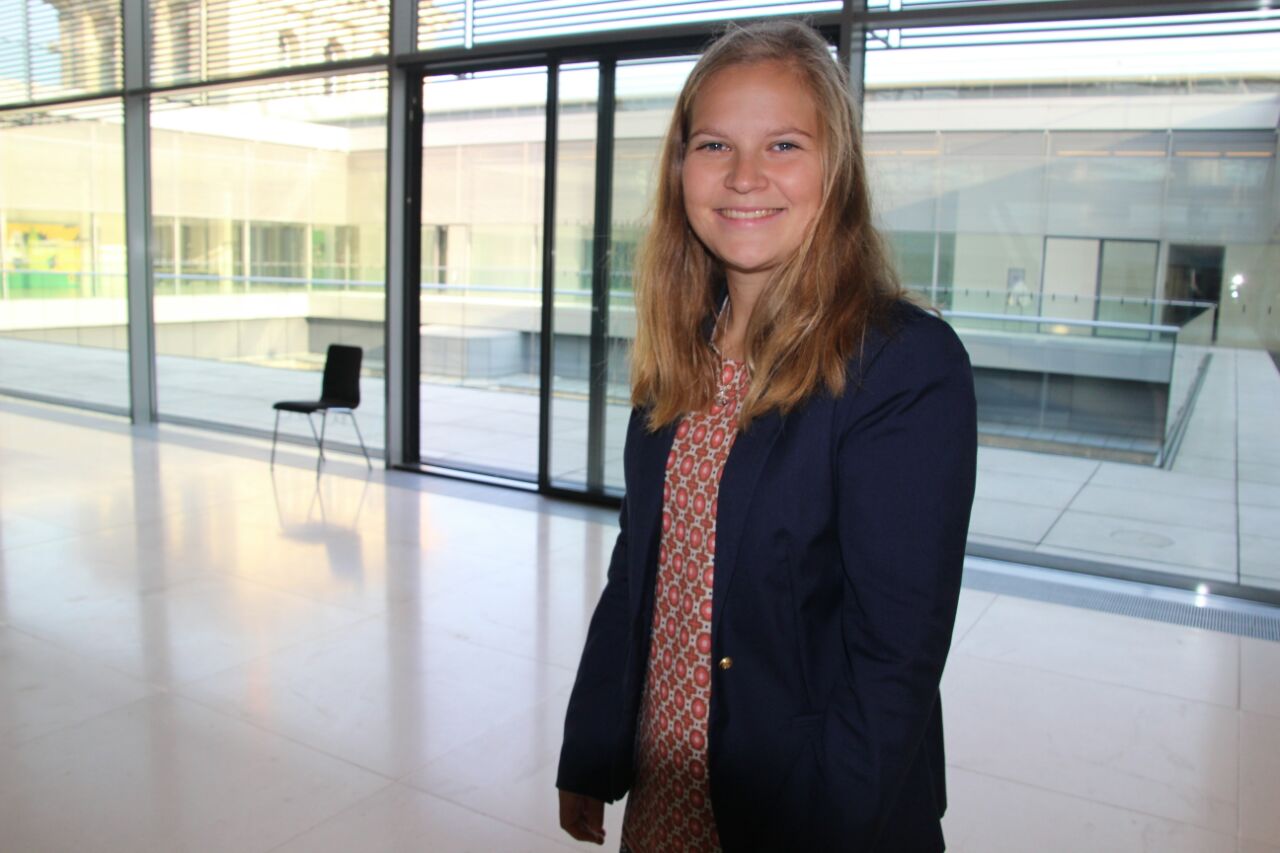
This contribution is a reflection by Isabelle Ann-Kathrin Zundel on her journey as a Ph.D. candidate at the Chair of African Legal Studies, which she successfully completed in 2024. Her dissertation can be found here.
[1] Isabelle Zundel, ‘Claiming SOGIESC rights through the African human rights system – Analysis of normative, institutional and procedural frameworks based on the example of sexual orientation’ (Dissertation) <https://epub.uni-bayreuth.de/id/eprint/8424/1/2025-05-08%20Disstertation_Isabelle%20Zundel.pdf> accessed 09 October 2025.
[2] Koen De Feyter, ‘Localizing human rights’ in W. Benedek et al (eds.), Economic Globalisation and Human Rights (Cambridge: Cambridge University Press, 2007).
[3] See, Ayo Sogunro, ‘Democracy’s canary: What anti-LGBTQ politics tell us about our democratic future’ <https://www.theglobeandmail.com/opinion/article-democracys-canary-what-anti-lgbtq-politics-tell-us-about-our/> accessed 9 July 2025.
[4] Kyle Knight, ‘Poland Ends ‘LGBT Free’ Zones ‘Gender Ideology’ Panic Should Become a Relic of the Past’ <https://www.hrw.org/news/2025/05/16/poland-ends-lgbt-free-zones> accessed 22 December 2025.
[5] Human Rights Watch, ‘UK: Court Ruling Threatens Trans People Judgment Opens Door for Discrimination, Segregation, and Exclusion’ <https://www.hrw.org/news/2025/05/09/uk-court-ruling-threatens-trans-people> accessed 22 December 2025.
[6] See, Ben Warwick and Kathryn McNeilly, The times and temporalities of international human rights law (2022, Cambridge University Press).
[7] Thoko Kaime, ‘Legitimacy, Public International Law and Intractable Problems’ (2023) Zeitschrift für ausländisches öffentliches Recht und Völkerrecht 83, 3, 399-413.
[8] According to Art. 2 of the Universal Declaration of Human Rights.
[9] Serawit Debele and Isabelle Zundel, ‘The notion of the human as an intractable problem of the law: a critical appraisal’ in Thoko Kaime & Bonolo Dinokopila (eds) Intractable Problems of Human Rights (forthcoming).